Building a Gateway for Global Capital
Vietnam established its International Financial Center (VIFC) to secure a position as a global investment destination, offering an open, transparent ecosystem that attracts more foreign capital and fuels economic development. With groundwork laid in December 2025, the VIFC has been established and is being operationalized across two hubs: Ho Chi Minh City for capital markets, banking, and fund management, and Da Nang for fintech and green finance (Vietnam Government). As of July 2026, nearly six months after the launch of the Ho Chi Minh City center, it had drawn investment commitments exceeding USD 21 billion, reflecting healthy interest in Vietnam from foreign institutional investors (VietnamPlus).
Similar to international financial centers in other markets, the VIFC brings banks, asset managers, exchanges, custodians, lawyers, auditors, and regulators into one ecosystem, under rules designed to make cross-border transactions more predictable. By concentrating capital, expertise, and professional services, a successful center can reduce the time and cost of connecting investors with companies and projects, while making it easier to complete transactions, manage risk, and resolve disputes.
The VIFC was established in part to help close the roughly USD 1.5 trillion in funding Vietnam says it needs to industrialize and meet its economic growth targets in the coming years (VietnamPlus). The center is designed to channel capital directly into the country's growth sectors and modernize its financial markets, rather than routing that capital through offshore hubs such as Singapore or Hong Kong first. For investors, this would mean a more efficient and accessible market, with regulatory and operational requirements that move closer to global standards – although getting there will be a long and challenging road for Vietnam.
Several parts of the framework are particularly relevant for foreign investors. VIFC transactions and dispute proceedings may be conducted in English; qualifying parties can agree to foreign governing law; and disputes may be referred to international arbitration, the VIFC arbitration center, or foreign and Vietnamese courts. Members may use International Accounting Standards (IAS) or International Financial Reporting Standards (IFRS), transact in permitted foreign currencies and remit capital, profits and lawful income abroad through foreign-currency accounts. Foreign investors also receive simplified procedures for establishing entities and acquiring interests in VIFC members.
These provisions do not place the VIFC outside Vietnamese law. Instead, their purpose is to give cross-border investors more familiar documentation, accounting, currency and dispute-resolution options, thereby reducing some of the legal and operational friction involved in investing in a new market. Their value will ultimately depend on consistent implementation and enforcement.
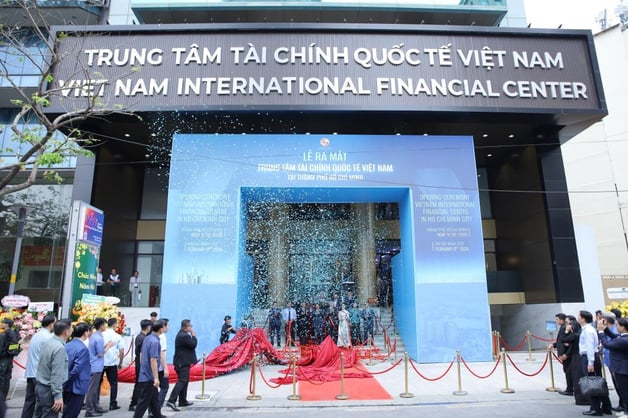 The VIFC headquarter in Ho Chi Minh City, opened in February 2026
According to government officials and the center's own leadership, the project is expected to span around five to ten years. Financial centers built from scratch tend to take this long to mature. Take the United Arab Emirates as an example: Dubai's International Financial Center (DIFC) began operations in September 2004 with a handful of resident companies, and two decades later it registers more than 2,500 active firms and regulates over 1,000 (DIFC). It is now ranked among the top seven global financial centers (GFCI), home to major international banks, asset managers, and law firms. On a comparable timeline, the VIFC is still in its initial institutional and operational build-out: its governing structure has been launched, but much of the licensing, infrastructure, and product ecosystem remains under development.
Last month, the executive board of VIFC Ho Chi Minh City said pledged capital still needs clearer rules, closer international cooperation, and modern financial infrastructure before it converts into disbursed capital (VietnamPlus). VIFC's CEO, Richard D. McClellan, also said in a June 2026 interview that the center considers banking licenses, asset management registration, and corporate bonds as its current development priorities. It will take time, however, to turn committed capital into actual transactions by closing these gaps: completing the specialized legal and supervisory framework; licensing banks and asset managers; putting core financial, digital, and legal infrastructure into operation; and launching enough investable products and projects.
In the near term, many foreign investors are likely to continue accessing Vietnam through established international fund and financial centers – including Luxembourg, Singapore, Hong Kong and, depending on the vehicle, Cayman – rather than establishing directly within the VIFC. Kenno’s Luxembourg-domiciled fund is one example of an existing, regulated route through which international investors can gain exposure to Vietnamese equities. As the VIFC matures, though, one of its effects should be widening the pool of capital and institutions engaging with Vietnamese companies, including the mid- and large-cap holdings that make up a large part of our portfolio.
While our Luxembourg structure already gives international investors a practical route into Vietnam, the VIFC’s potential value is that it could improve the market underneath that vehicle. A broader and more diverse investor base can improve liquidity, helping fundamentally strong businesses trade closer to what their earnings and fundamentals justify rather than carrying a persistent illiquidity discount. Greater institutional participation can also raise expectations around financial disclosure, corporate governance, and minority-shareholder protection. For an active investor, this can improve execution, expand the investable universe, and reduce information and governance risk. For portfolio companies, deeper equity and bond markets can broaden funding options and lower the overall cost of financing. These outcomes are not automatic, but they are the principal market-wide reasons the VIFC matters to us.
The FTSE Upgrade: Separate but Complementary
Well before the VIFC's own long-term timeline plays out, FTSE Russell's reclassification of Vietnam to Secondary Emerging Market status, effective September 21, 2026, offers a much nearer checkpoint. The World Bank estimates the upgrade could bring in USD 3 billion to USD 5 billion in portfolio flows in the near term, rising to as much as USD 25 billion by 2030 if reforms continue. The phased index inclusion will provide a near-term test of Vietnam's trading, settlement, and liquidity infrastructure. For the VIFC, the longer-term test will be whether Vietnam can convert the international attention generated by the market upgrade into broader active investment and a greater volume of financial activity conducted onshore.
FTSE Russell's own criteria for the September upgrade rest on a separate set of market reforms. The passive, index-tracking capital tied to the upgrade is set to arrive on schedule, regardless of how the VIFC develops. On the other hand, active, discretionary capital tends to follow an index upgrade over the following one to two years, and it depends on fundamental improvements to the economy and financial markets, such as a functional onshore legal and tax structure, as well as other operational frameworks the VIFC is building.
Not all of the capital that follows the upgrade behaves the same way. Index inclusion determines which companies receive passive inflows. This includes some of our portfolio companies: Masan Group (MSN), FPT Corporation (FPT), and Vincom Retail (VRE), which sit on FTSE Russell's most recent list of eligible stocks (LSEG). In the longer term, however, additional active capital tends to prioritize companies with high-quality earnings, governance, and valuation, rather than following index rules. This is where sustained active ownership can make a difference in engaging with the companies and maximizing returns for investors.
With proper execution, the VIFC is expected to bring Vietnam's market infrastructure closer to the standards international investors are already familiar with, creating more opportunities for large-cap companies that still have enough shares available to foreigners. By having adequate foreign room in the ownership structure, companies can absorb new capital to fund business expansion and raise governance standards, attracting a wider pool of investors over time.
The Kenno Vietnam Fund invests in fundamentally sound Vietnamese companies at attractive valuations. With a Luxembourg fund structure, we already give investors in Europe and other parts of the world a clear, practical access route into Vietnam's market. While the VIFC is unlikely to replace established international fund and financial centers in the near term, we find it relevant because of its potential to improve the underlying Vietnamese market – by reducing legal and operational friction, broadening the investor base, deepening liquidity and raising market standards. If you would like to learn more about the fund or our investment approach, feel free to reach out to us.