Vietnam’s Ministry of Construction has released a draft resolution proposing a pilot framework for affordable commercial housing, a new segment designed to serve middle-income households (who typically earn over VND 15,000,000, or USD 600, monthly). The hybrid “affordable commercial housing” model is supposed to blend elements of existing social housing programs for low-income buyers and high-end commercial projects that dominate the current supply pipeline, addressing price gaps in the market.
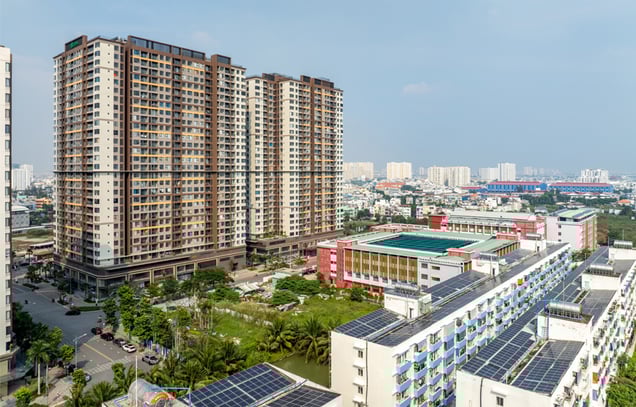 Akari City by Nam Long Group – an affordable condominium project in Ho Chi Minh City.
The residential market in Vietnam has been facing a long-standing mismatch between demand and supply. While most urban households fall within the middle-income category, a large share of new housing projects has focused on premium segments. Industry estimates suggest that 70–80% of new supply in major cities has been concentrated in higher-end developments, leaving relatively limited options for buyers seeking reasonably priced apartments.
Under the draft resolution, developers of eligible projects may be appointed directly without participating in auctions or bidding processes. These projects could also receive preferential credit access and would be exempt from requirements to allocate internal land for social housing, a rule that currently applies to many residential developments. However, unlike social housing projects, developers would still need to pay land use right fees, which remain one of the largest cost components alongside construction expenses.
Stricter profitability restrictions are also being discussed. Developers participating in the program would face a profit margin cap of 15% of total project investment capital. While this limit aims to keep housing prices accessible for middle-income buyers, it may reduce incentives for some developers. For comparison, companies that currently offer lower- and mid-end residential projects often record profit margins in the 15–25% range, supported by more pricing flexibility.
If the resolution is passed, we expect it to be relatively beneficial for property developers already active in the affordable segment, compared with those selling higher-end products. This is because, although the 15% profit cap could limit margins and affect the pricing strategies of developers, it would create greater pressure on high-end players who currently compete in central urban areas. This should allow established providers in the lower-priced segment, such as our portfolio company Nam Long Group (NLG), to position themselves relatively better in the market, along with rising real demand for affordable housing.
In our view, however, the framework execution may face some challenges. For instance, whether the policy will be implemented smoothly will depend on effective cost auditing standards, clear oversight mechanisms to prevent pricing transfers, and a legally robust process for appointing developers without competitive bidding. If these challenges can be overcome as the Government introduces more measures in the coming months, we believe the new policy will contribute significantly to addressing the structural imbalance in Vietnam’s real estate offerings, bringing supply closer to the purchasing power of the growing middle class. This potential re-segmentation of the market should also be a positive factor for NLG’s strategy and profitability outlook.
The Kenno Vietnam Fund invests in high-quality consumer companies that benefit from Vietnam’s resilient economic growth and an expanding middle class driving domestic consumption. If you’re looking for exposure to one of Asia’s fastest-growing economies, feel free to reach out to us.