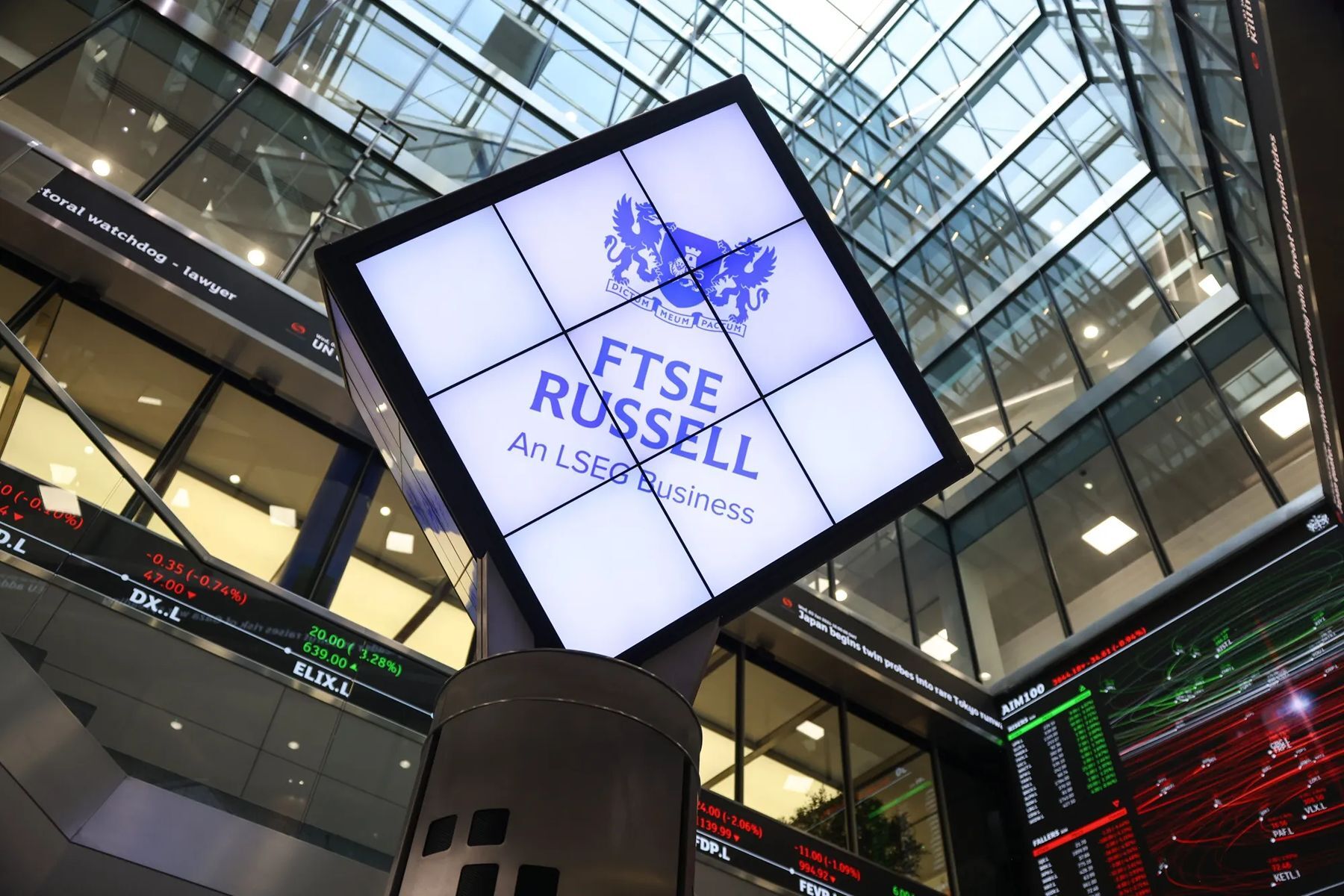
Last week, our teams from Singapore and Hanoi met in Ho Chi Minh City to attend Vietnam Access Days (VAD), hosted by Vietcap Securities. The annual conference brought together over 600 institutional investors and policymakers for a broad review of Vietnam’s macroeconomy and sector trends, and what these mean for international investors.
This article marks the first in a short series summarizing our observations from the event. We begin with key insights from Vietcap’s Macro & Strategy Masterclass, which overviewed macroeconomic developments and set the tone for discussions across the three-day conference.
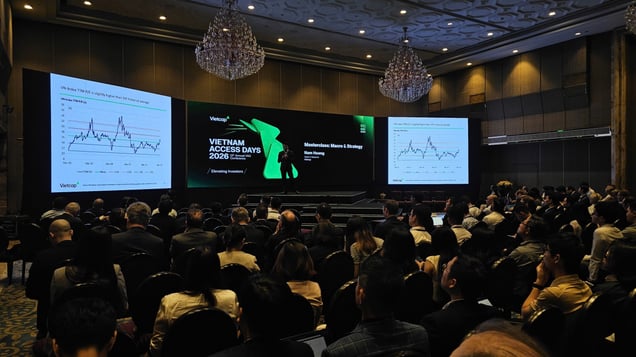 Nam Hoang, Head of Research at Vietcap, leads the Macro session at VAD. Photo: Kenno
Reform-Driven Growth
Vietnam closed 2025 with GDP growth of 8%, the second-highest rate since 2011 following the post-COVID rebound, and has now set a target of at least 10% growth for 2026. The government has also outlined a goal of sustaining double-digit growth during 2026–2030. Although some might question the feasibility of these ambitious targets, policymakers have highlighted that this represents a necessary strategic direction, prioritizing core growth drivers for the next five years: institutional reform, infrastructure expansion, and private sector development.
At the same time, in January, the World Bank and the IMF have both revised global growth forecasts for 2026 to 2.6% and 3.3%, respectively, up 0.2 percentage points from their 2025 projections. Looking at stable GDP growth projections for the U.S., the EU, China, South Korea, and Japan – markets that collectively accounted for more than two-thirds of Vietnam’s goods exports – economists suggest a more stable external backdrop for Vietnam, at least in the short term. In addition, the country continues to strengthen its international ties to diversify export channels and mitigate geopolitical risks.
Against this backdrop, we expect Vietnam’s leadership to support this growth period with strong reform momentum, similar to what we have been seeing since mid-2024. In late January 2026, General Secretary To Lam was re-elected for a second term lasting five years, while the Politburo announced several adjustments to its composition. This should help extend policy continuity while removing bottlenecks at the implementation level to align with economic goals through 2030.
Last month, in the weeks before the re-election, the Vietnamese stock market slowed as investors reacted to rumors about potential changes in the leadership. Once it became clear that To Lam would continue for a second term, the VN-Index and trading activity rebounded, as investors felt reassured that his pro-business and reform-oriented agenda would remain unchanged.
Competitive Global Positioning
Recent trade policiestoward multiple countries indicate that the U.S. continues to use tariffs as anegotiating tool. For Vietnam, the current U.S. tariff rate remains below theaverage of several potential competitors in Southeast Asia (20% vs. a regionalaverage of 26%). Vietnam’s low manufacturing labor costs (USD 5,270 annually in2025, around 21% lower than its peers’ average) also support itscompetitiveness within global value chains. Vietcap forecasts continued exportgrowth of 12% in 2026 and 14% in 2027 for the country.
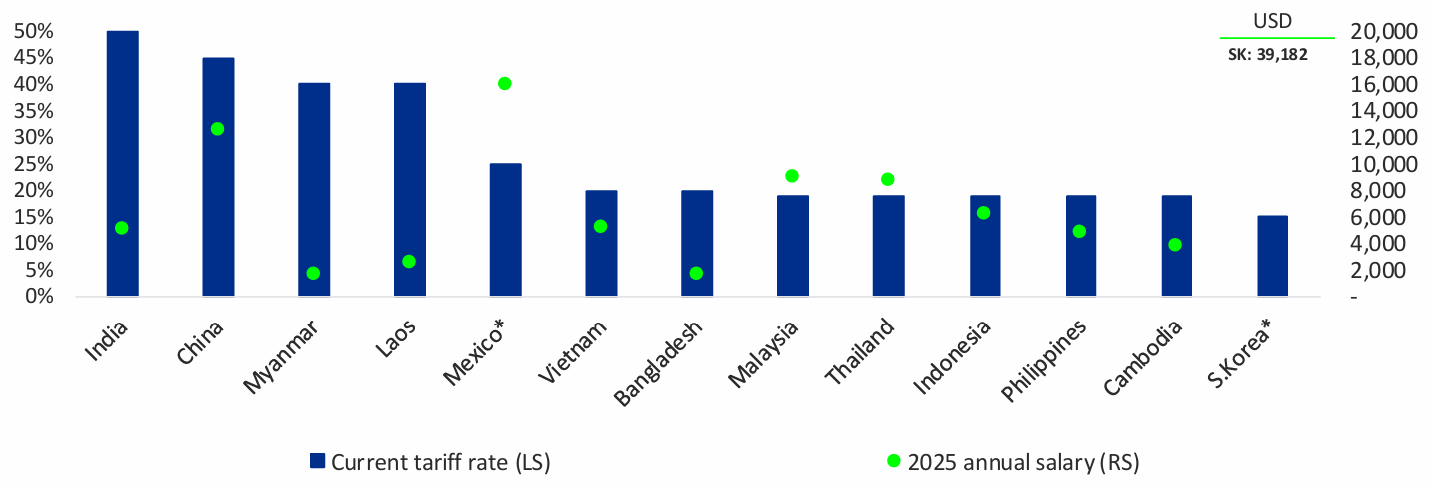 Tariffs and annual cost of manufacturing workers in 2024. Graphic: Vietcap
However, uncertainty remains around the definition of “transshipment.” In other words, economists point out Vietnam’s limited value added for certain supply chains that include exports from China, re-labeled in Vietnam, then re-routed to the U.S. So far, reports have suggested up to 16.5% of Vietnamese exports to the U.S. during 2018–2019 could be attributed to this method. Combined with low localization rates in some export sectors, such as electronics and machinery, this could pose certain risks in future tariff negotiations.
From our perspective, while international trade does not have any immediate impact on our portfolio companies, we closely monitor these conditions as they reinforce the importance of sector selection and understanding each company’s exposure to export markets and supply chain rules. While some consumer businesses such as Masan Group (MSN) have announced long-term ambitions to expand abroad, their core growth drivers remain firmly anchored in Vietnam’s domestic consumption story.
Increasing Domestic Focus
Vietnam’s most significant administrative reform in the past year was restructuring at both central and provincial levels, including a reduction in administrative units and civil service headcount. This helps improve operational efficiency and the quality of public services, setting a solid foundation for domestic growth. This has reportedly saved the government USD 1.5 billion in 2025 and is expected to save USD 7.2 billion during 2026–2030. The legal framework was also improved with Resolution 66, which simplifies processes, reduces compliance costs, and supports a more open business environment.
On top of this, the government pushed for both private and public sector development. This was reflected in Resolution 68 promoting the private economy, especially small and medium enterprises, as well as Resolution 79, which sets clearer expectations around governance and efficiency for state-owned enterprises (SOEs). Vietnam should also see more private-public collaborations in hi-tech sectors, especially semiconductors, as mastering core technologies and breakthroughs in science were identified as new economic drivers.
Furthermore, infrastructure remains a central pillar, with public investment increasing 9.2% YoY in 2026. In 2025 alone, 564 construction projects were started or inaugurated, representing approximately USD 195 billion in total registered capital. Public debt is forecast to remain at 36–37%, well below the 60% legislative cap, leaving ample room for further funding expansion. Broad-based infrastructure developments – including high-speed rail, regional rail links, airports, and large urban areas – also help lift consumer sentiment and encourage spending.
Behind each of these efforts, Vietnam has placed emphasis on developing its human resources, such as through Resolution 71 improving the talent pool and Resolution 72 enhancing national healthcare. Economists project income and demand to accelerate along this trajectory, which also aligns with our belief that 2026 will be key for the recovery and growth of Vietnam’s consumer market.
Investment Outlook
Within current macro conditions, Vietcap’s experts highlighted four sectors with the strongest earnings growth momentum: Consumer, Materials, Financials, and Energy. Among these, we have been closely following retail sector (consumer staples and consumer discretionary) as they account for a large portion of our holdings.
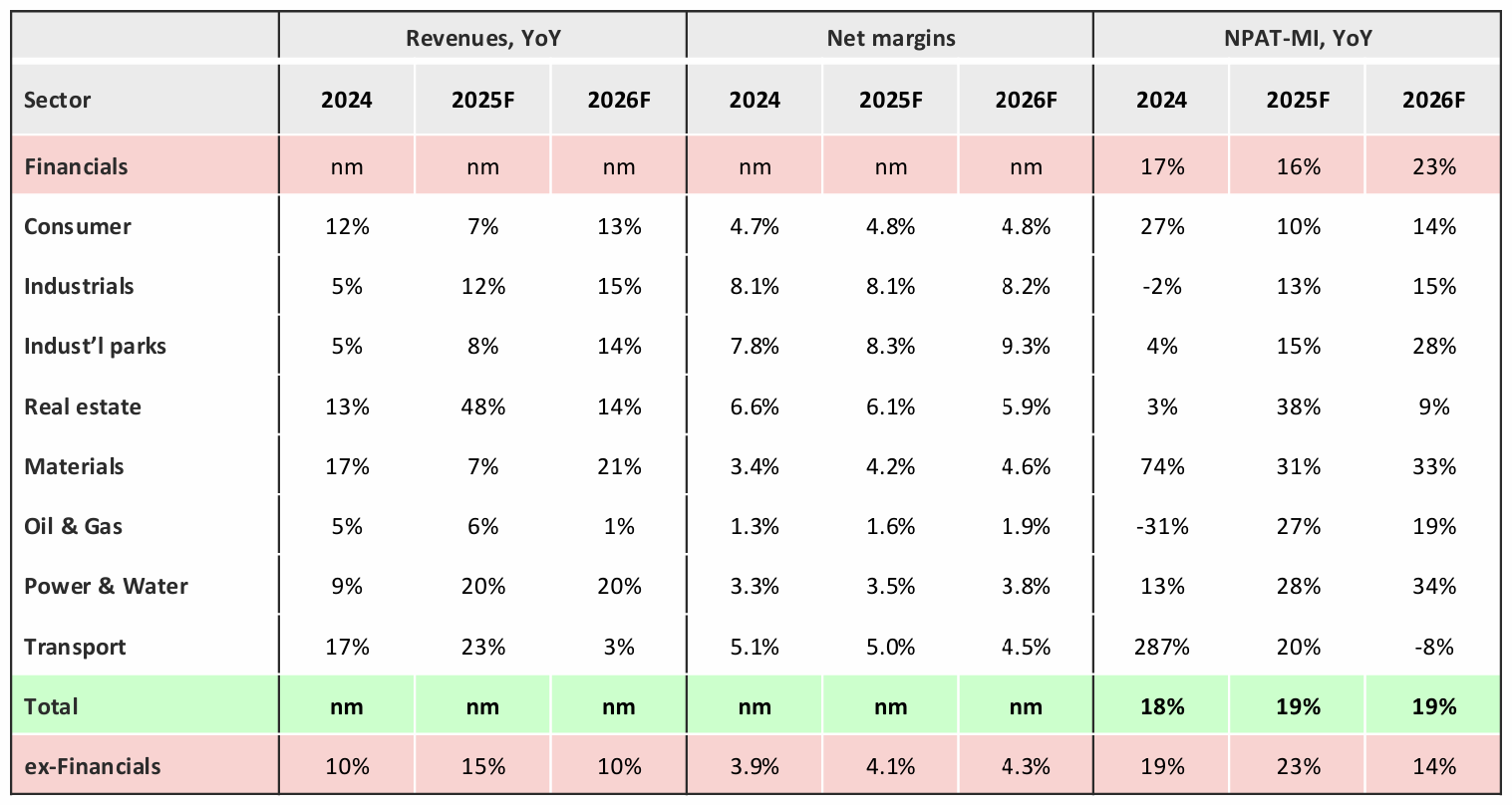 Sector earnings growth forecast in Vietnam during 2024-2026. Graphic: Vietcap
Key themes in the consumer sector include:
-
Stricter tax enforcement and anti-smuggling measures are shifting market share toward compliant modern retailers.
-
Rising compliance costs for fragmented players are accelerating consolidation in favor of large businesses.
-
Leading retail chains are reaching profitability thresholds, supporting disciplined store expansion.
-
Rapid urbanization and sustained GDP growth support demand and a multi-year consumption cycle.
These structural changes are likely to benefit well-established and fundamentally strong consumer players such as our portfolio companies Masan Group (MSN), Mobile World Corporation (MWG), and FPT Retail (FRT). As stricter tax rules and e-invoicing requirements push smaller informal players (often family-run businesses) out of the market, larger listed companies stand to benefit. Masan, MWG, and FRT have already built scale, operational discipline, and brand trust over the past decade, which positions them well to gain additional market share.
As active investors, by ensuring these qualities are always present in the companies we invest in, we remain confident that these consumer holdings will lead the next market upcycle and deliver superior returns for shareholders. At the conference, presenters and participants also shared our view that the consumer retail sector is now seeing ample room to grow from the current macro setup.
For a more detailed write-up on sector analysis, as well as discussions around the FTSE Emerging Market upgrade, stay tuned for upcoming publications in the “Kenno at VAD 2026” series in our blog section. If you have any questions or would like to discuss investing in Vietnam, feel free to reach out to us.